When an AI image feels close to your idea but still misses the mark, the next step is often to make a clearer creative decision. What should the viewer notice first? What atmosphere should the image create? Which details are essential to the story?
Midjourney is a useful place to practise translating those decisions into visual language. This guide uses an imaginary café campaign to show how to write a focused prompt, compare results and develop a consistent direction.
Choose a single visual idea
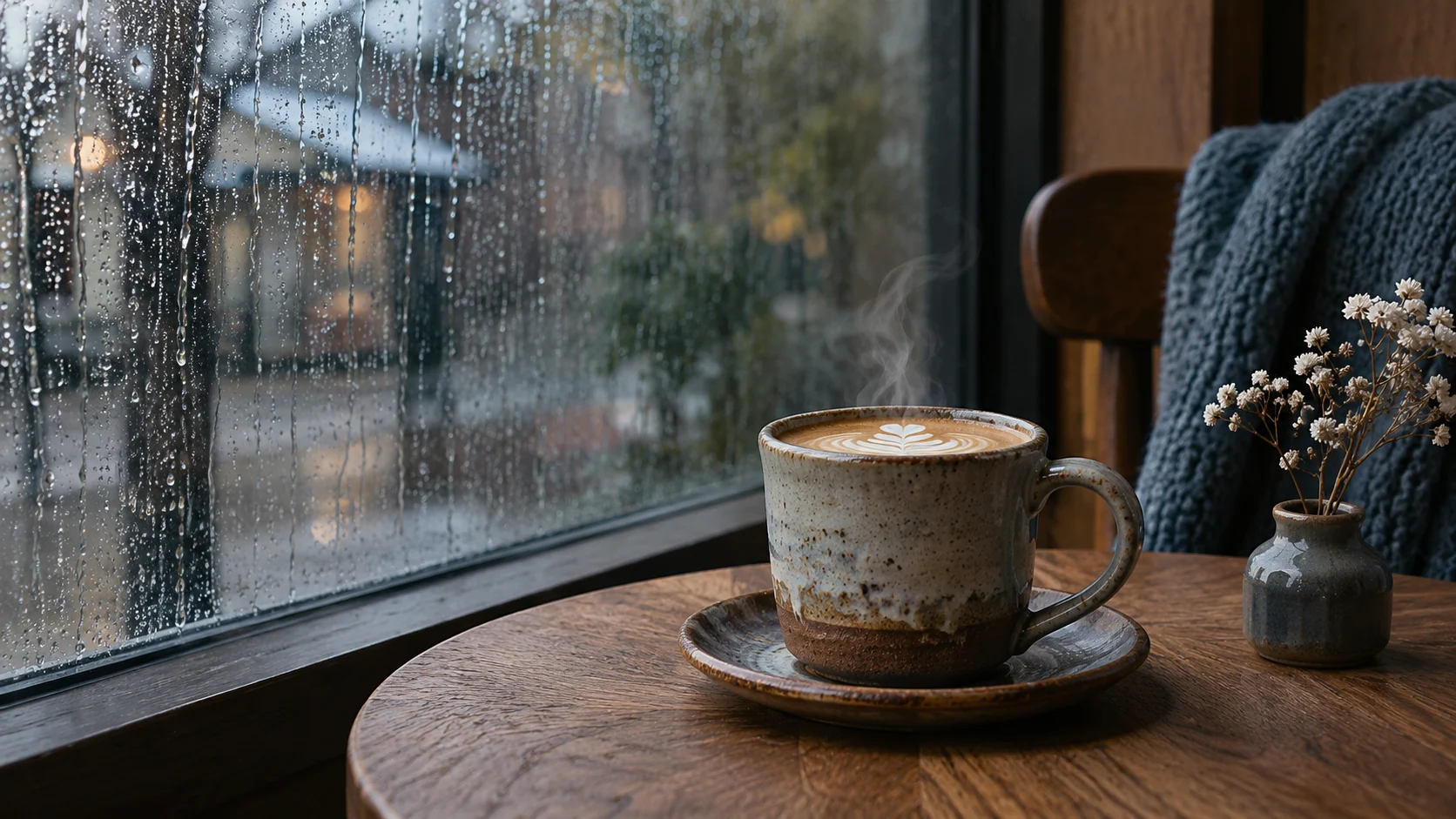
“A beautiful café image” leaves many decisions open. It could mean a crowded interior, a close-up of a cup, a street scene or an illustration. For our practice campaign, choose a ceramic coffee cup on a small table beside a rainy window. The intended feeling is a quiet break during a busy day.
Write the message separately from the prompt. Our campaign message is “Make time for a pause.” The image does not need to contain those words. It needs to support that feeling through its subject, composition and light.
Build a compact prompt
Midjourney’s official guidance encourages short, clear prompts and identifies subject, medium, environment, lighting, colour, mood and composition as useful considerations. Choose the details that matter to your particular image. See Midjourney’s Prompt Basics.
Here is an original starting point:
Editorial photograph of a handmade ceramic coffee cup on a small oak table beside a rain-streaked café window, soft overcast daylight, muted brown and blue palette, quiet reflective mood, close composition with clear space above the cup.
Each phrase makes a decision. “Editorial photograph” establishes the medium. The table and window establish the setting. The palette and daylight support the mood. The clear space gives the eventual layout somewhere to put a headline.
Remove conflicting instructions
Read your prompt as though you were briefing a photographer. A quiet, minimal scene with dramatic action, many props and a crowded background contains competing priorities. Decide what the image should communicate first, then remove details that weaken that direction.
A longer prompt can still be useful when every detail has a purpose. For this exercise, avoid stacking general praise such as “amazing” and “perfect.” Replace those words with observable features such as a low viewpoint, a simple background or a soft shadow.
Compare images using the same questions
Review each result against three criteria. Is the cup immediately recognisable? Does the scene suggest a quiet pause? Is there usable room for the campaign copy? Score each criterion from one to three and write a brief reason.
This small review habit prevents you from selecting a visually dramatic image that fails the assignment. You can admire an interesting result and still decide that another version communicates the campaign more clearly.
Change one part of the brief
Choose the strongest direction and test a single change. Compare an eye-level view with a slightly higher view, or cool daylight with warm afternoon light. Keep the subject, setting and intended message stable while you investigate the difference.
Save the prompt with each selected output. Note which changes improved the composition and which introduced distractions. The aim is to develop your judgment through comparison. Generated results can vary, so treat the notes as observations from your tests.
Build a three-image series
Once the main image works, create two companion concepts using the same palette and mood. One could feature an open notebook beside the coffee. Another could show an empty café chair near the window. Keep the recurring choices visible in your prompts and review the images together.
Place the three images side by side before using them. Check whether they feel like one campaign and whether each contributes a different idea. Adjust the crop and final layout so the series has a consistent visual rhythm.
Your next learning step
Use this exercise alongside Midjourney Tutorial for Beginners: Create Stunning AI Images. The course introduces Midjourney basics, prompt writing and image styles. Bring your café concept, compare your results and keep a short record of the decisions that improve them.